Tweets: Memes or Nah?
We’re back with the important questions! If we’ve learned anything from our research on memes, it’s that the definition of “meme” itself is hard to pin down, especially once you drill down to specific examples.
Below, Tessa and Courtenay debate whether the Tweets featured herein count as memes or if they’re something else entirely. We also include a couple pennies’ thoughts from Anneliese (who is currently drafting our website introduction and is fully steeped in Multimemia research) and Kara (who is relatively new to the world of Thinking About Memes but is excited to learn).
Debate Background
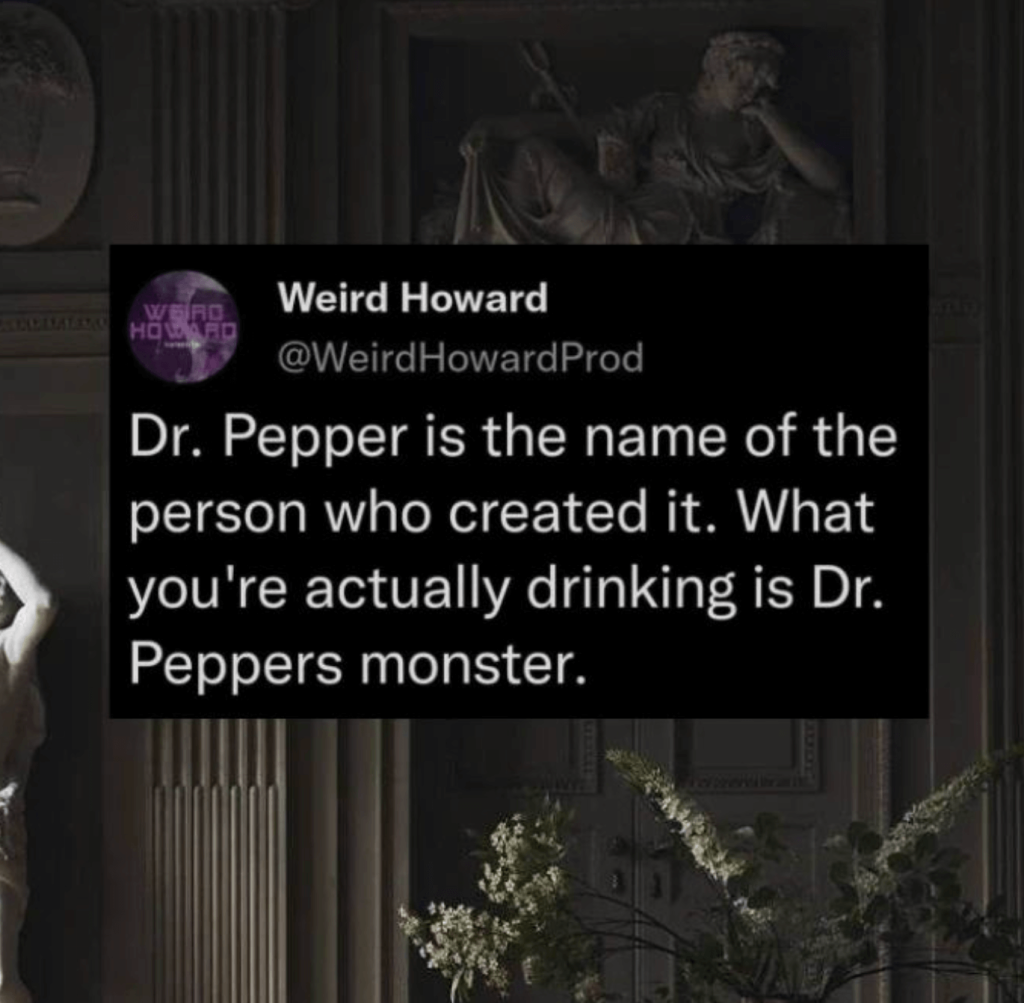
On the morning of November 24, 2022, Tessa posted some content to our group Slack chat for use around our website. Some of the content were images of Tweets. Courtenay then asked: “Are the tweets memes?” Voila! A debate was born.
Tessa: Team “These Tweets Are Memes”
They sure are! That’s where our definition of what memes are and what their formats are really comes in to play—memes aren’t just photos with text on them. Like, dabbing was a meme. Or planking (back in the early 2010s).
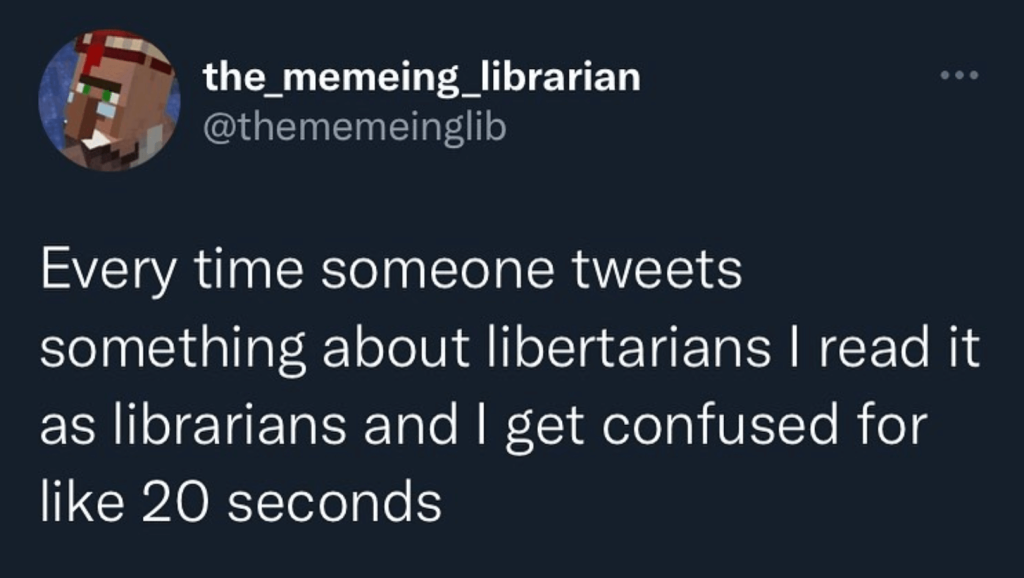
So what one has to think about with tweets is how they spread onto other platforms. In this case, some of these tweets were then shared to Instagram—that covers the transmission part.
The remixing might come in the way that someone captions the meme. Or sometimes you’ll see someone use basic paint software to cover up one of the words in the original meme and replace it with another.
One of the difficult parts of the text-only memes is that you need to have really seen that idea elsewhere to understand that it’s a meme of some sort.
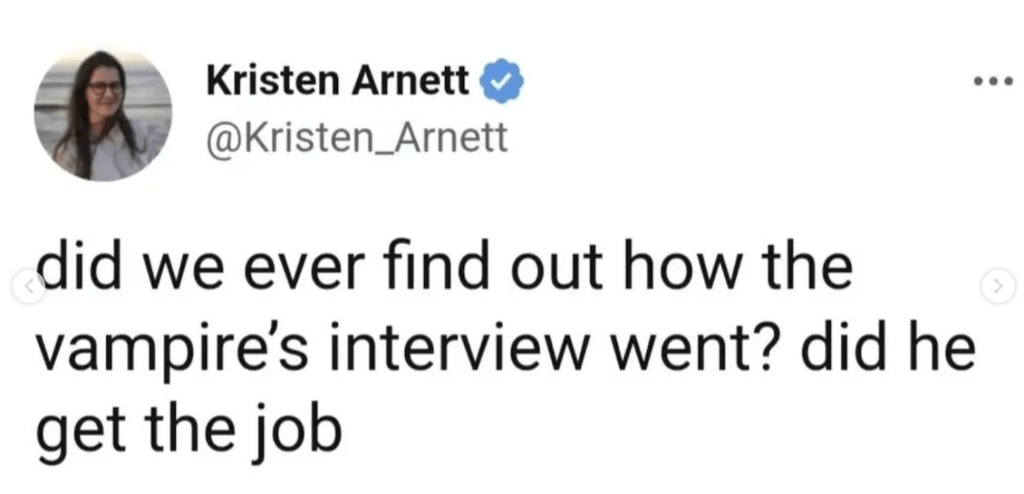
And then the Tweets are memes in other ways too—this Interview with a Vampire one is not the only meme that uses the title of a book to pose a sarcastic question. So it may already be an iteration. Beyond that, it would also fit into the canon of memes about Interview with a Vampire.
I think if we go back to the definition of what a meme is, it’s “a unit of culturally transmitted information” (definition from an Endless Thread podcast episode—MEMES, Part 1: Kilroy was here). A meme can literally be anything.
Courtenay: Team “These Tweets are Not Memes”
I agree there are key components of memes present in these Tweets, particularly in relation to transmission. They also reflect what Donovan, Dreyfuss, and Friedberg note about memes in their 2022 book Meme Wars in that they advance a kind of inside joke between the meme creator and the meme viewers. Further, Richard Dawkins, widely seen is the originator of the term meme in a 1976 book, The Selfish Gene, first described the term as “an idea, behaviour or style that spreads from person to person within a culture.” By that definition, these Tweets can be seen as inhabiting a popular style of joke.
But even in these contexts, jokes are not always memes. Later in the same article, Dawkins—now speaking in 2013 rather than the “pre-internet-meme” era of1976—suggests that memes become memes as a result of going viral. Do we consider these Tweets as having gone viral or reflecting something that went viral? (Do we now have to define what going viral is?)
And then we touch on the remixing. In Meme Wars, Donovan, Dreyfuss, and Friedberg emphasize that one of the main indicators of a meme is that it can be “recontextualized, remixed, and redistributed, carrying all sorts of meaning” (page 2).
Are these Tweets a part of a remix trend around the ideas/cultural outputs they’re referencing, or are they standalone jokes that are, themselves, unlikely to experience viral remixing? What is the “thing” each Tweet is iterating on, and is it a part of a general trend of iterating on that specific thing?
Yes, the Tweets recontextualize popular books/objects/ideas, and there is an opportunity for future remixes, but is there a broader movement to recontextualize the same cultural outputs in similar styles?
I guess it gets down to these questions: What is the “thing” that is being widely remixed and redistributed? What has gone viral that is being addressed in a new light?
I think Tweet jokes like these are adjacent to memes, but not really memes themselves. And I get nervous around the idea that everything can be a meme—at what point does the definition of “meme” get diluted to the point of no longer being useful?
Anneliese: The Waters, They Are Muddy
I think the biggest thing I realized yesterday was that the definition of what a meme is is really vague. I think the gist is that is just has to be spreadable and replicable.
Kara: PopBuzz Sees No Difference Between Topical Memes and Tweets
This PopBuzz post is definitely not scholarly, but could be a good (recent) case study of how pictures of Tweets can be used as memes.
Where Do You Land on the Tweets Are Memes Versus Tweets Are Not Memes Debate?
What are your thoughts on this topic? Have you been convinced one way or another? Did we make the definition of “meme” even murkier for you? (Welcome to the club.) Leave your thoughts below in our comments section.
References
Carlson, R. (2021, October 1). MEMES, Part 1: Kilroy was here. Wbur Endless Thread. https://www.wbur.org/endlessthread/2021/10/01/memes-kilroy
Donovan, J., Dreyfuss, E., & Friedberg, B. (2022). Meme Wars: The Untold Story of the Online Battles Upending Democracy in America. Bloomsbury Publishing.
Smith, K. L. (2022, November 18). RIP Twitter memes are going viral and they’re truly god tier. PopBuzz. https://www.popbuzz.com/internet/viral/twitter-shut-down-memes/
Solon, O. (2013, June 20). Richard Dawkins on the internet’s hijacking of the word “meme.” Wired. https://www.wired.co.uk/article/richard-dawkins-memes